The Best Parenting Moments Don't Look Like Much From the Outside
Last summer, a family in Portland spent three weeks planning a trip to a major theme park — the flights, the character breakfasts, the strategically timed FastPasses. They documented everything. The kids looked delighted in every photo.
Ask their nine-year-old what she remembers most from that summer, though, and she'll tell you about the night her dad let her stay up late to watch a thunderstorm from the porch. They didn't take any pictures. They just sat there, wrapped in a blanket, watching lightning split the sky and talking about where thunder comes from.
"She still brings it up," her dad, Joel, says, laughing a little. "We spent a fortune on that trip. And the thing she remembers is the porch."
It's a story that would feel almost clichéd if it weren't so consistently, stubbornly true.
The Pressure to Make It Count
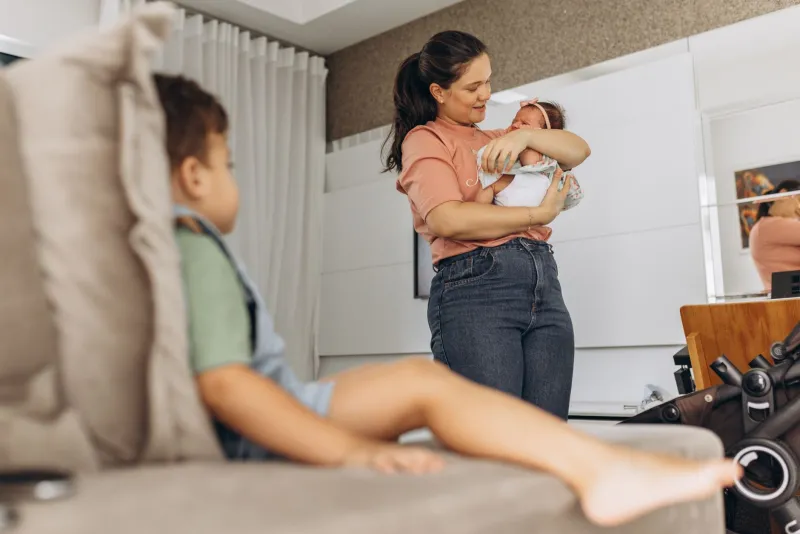
Modern parenting culture has a complicated relationship with ordinary time. Between social media aesthetics, the curated perfection of family lifestyle content, and a broader cultural anxiety about doing enough for our kids, there's enormous pressure to make parenting look intentional — to fill children's lives with enriching experiences, meaningful outings, and memories worth photographing.
This pressure isn't entirely without good intent. Parents want to be present. They want to give their kids a rich childhood. The problem is that the definition of "rich" has quietly shifted toward the performative and the exceptional — and in chasing that version of quality time, many families are inadvertently devaluing the ordinary moments that developmental science consistently identifies as the most formative.
"There's a real mismatch between what parents think matters and what the research shows actually matters," says Dr. Lenora Haines, a developmental psychologist at a university in the Midwest who studies parent-child interaction. "The big experiences have their place. But the texture of daily life — the small, repeated, low-stakes interactions — that's where attachment is built, where language develops, where children learn how to be in relationship with another person."
What's Happening in the Ordinary Moments
The neuroscience here is worth understanding, because it reframes the mundane in genuinely exciting ways.
Children's brains are not waiting for peak experiences to develop. They're building neural architecture continuously, through every interaction and environment they encounter. The serve-and-return model of early development — where a child initiates some form of communication and a caregiver responds, back and forth — is one of the most powerful drivers of healthy brain development identified by researchers at Harvard's Center on the Developing Child. And that kind of interaction doesn't require a museum or an activity. It happens in the grocery store. In the car. At the dinner table. During bath time.
Language development, specifically, is profoundly shaped by conversational exposure in everyday contexts. Research from the past decade has reinforced what's sometimes called the "30 million word gap" — the idea that the sheer volume of words children hear in casual, daily conversation has lasting effects on vocabulary, reading readiness, and academic outcomes. Those words aren't coming primarily from educational programs or structured activities. They're coming from a parent narrating what they're making for dinner, or asking a child what they noticed on the walk home.
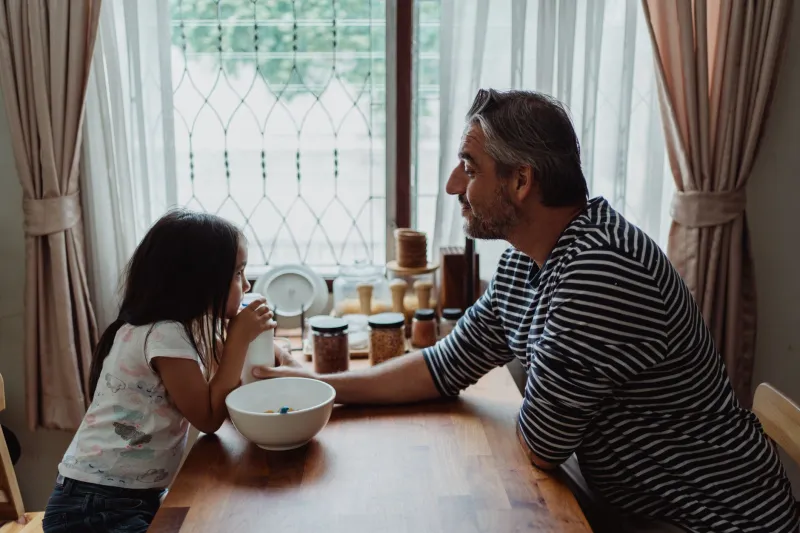
And attachment — that foundational sense of safety and trust that shapes how a child relates to the world — is built not through grand gestures but through consistent, responsive presence over time. The parent who reliably shows up, who is emotionally available during the small moments, who makes eye contact over a bowl of cereal — that's the parent building secure attachment, regardless of what the weekend itinerary looks like.
Why Ordinary Moments Feel Insufficient
If the science is this clear, why do so many parents feel like the everyday isn't enough?
Part of the answer is visibility. A trip to an apple orchard produces photos. A long conversation on the way to soccer practice doesn't. We've built an entire social ecosystem around documenting and sharing the exceptional, which makes the ordinary feel invisible — and invisible things start to feel like nothing.
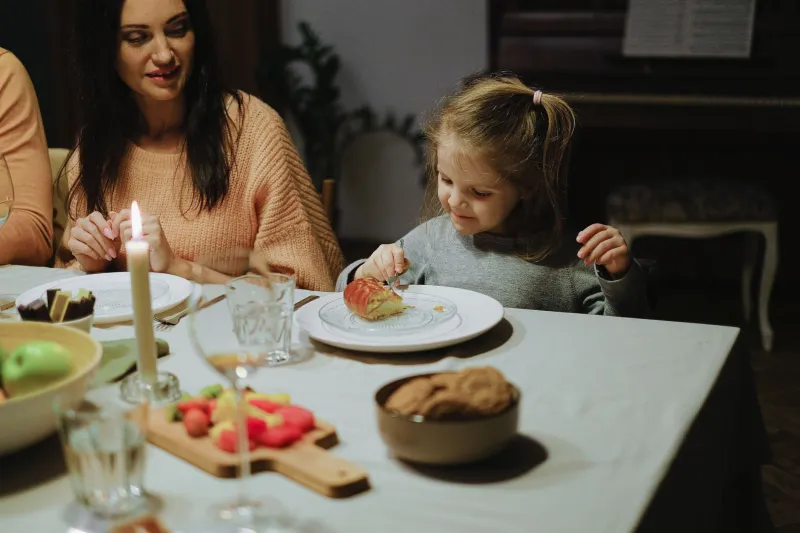
There's also the guilt economy of modern parenting, which trades heavily in the idea that more is always better: more stimulation, more enrichment, more intentional activity. In that framework, a quiet Tuesday evening at home can start to feel like a missed opportunity rather than exactly what it is — a child in a safe, familiar space, doing ordinary things alongside people who love them.
"We've pathologized boredom and ordinary time in a way that isn't serving families," says Dr. Haines. "Kids don't need to be constantly stimulated. They need to be consistently connected. Those are very different things."
Finding Presence in the Predictable
Shifting your relationship with ordinary time isn't about lowering your standards for parenting. It's about recalibrating what counts.
Let the commute be a conversation. The drive to school, the walk to the bus stop, the errand run — these are prime connection windows. No agenda required. Ask open-ended questions. Listen without redirecting. Let silence be okay too.
Make routines feel like rituals. There's a difference between a routine you rush through and a ritual you inhabit. Bedtime doesn't have to be elaborate to be meaningful. It just has to be consistent and warm. The predictability itself is the gift.
Do things alongside your kids, not just for them. Cooking dinner, folding laundry, gardening, fixing something around the house — inviting kids into ordinary adult tasks builds competence, conversation, and a sense of belonging that no structured activity can fully replicate.
Put the phone down for the small moments, not just the big ones. It's easy to put the phone away at a birthday party. The harder, more important practice is putting it down during the walk to the mailbox, during the snack after school, during the nothing-in-particular moments that make up the majority of family life.
Give yourself permission to be ordinary. You don't have to be performing parenthood every minute. A parent who is genuinely, quietly present — doing their own thing nearby, available but not hovering — is doing something real and valuable.
The Porch in the Storm
Joel from Portland thinks about that thunderstorm night a lot. He hadn't planned it. He wasn't trying to create a memory. He was just tired, and his daughter was awake, and he thought the storm was worth watching.
"I think that's the thing," he says. "I wasn't trying to give her anything. I was just there. And somehow that was exactly what she needed."
Somewhere, right now, a parent is stuck in traffic with a kid who won't stop asking questions. Another is doing dishes while a seven-year-old narrates a story that doesn't quite have a point. Another is sitting on the edge of a bed in the dark, waiting for a child to fall asleep.
None of it looks like much from the outside.
All of it is the whole thing.