From Frenemies to Lifelong Friends: How to Help Your Kids Actually Like Each Other at Every Age
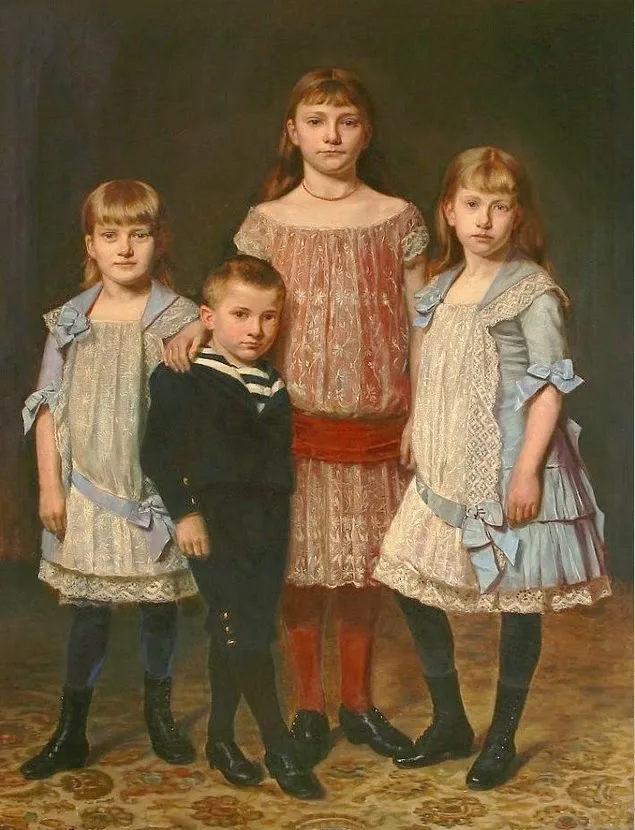
Photo: AnonymousUnknown author, Public domain, via Wikimedia Commons
If you've ever refereed a screaming match over who got more mac and cheese, watched one kid deliberately destroy another's Lego masterpiece, or heard the phrase "I wish I was an only child" shouted through a slammed bedroom door — welcome to the club. Sibling conflict is one of the most universal, most exhausting, and most misunderstood parts of family life.
Here's what often gets lost in the chaos: conflict itself isn't the enemy. In fact, developmental researchers have found that sibling relationships are actually the training ground where kids learn to negotiate, manage big emotions, repair ruptures, and practice empathy. The goal isn't to eliminate friction — it's to build a foundation strong enough that the relationship can hold it.
The way you support that relationship, though, needs to shift as your kids grow. What works for a toddler and an infant looks nothing like what works for two teenagers. This guide breaks it down by stage, with real strategies you can actually use.
Infancy and Toddlerhood (Ages 0–3): Building Bridges Before Words Exist
Bringing a new baby home is, from a toddler's perspective, roughly equivalent to your partner announcing they've invited a second spouse to move in. Permanently. The toddler's world has been upended, and they don't have the language or emotional regulation skills to process it gracefully.
Research from the University of Cambridge found that the quality of the older sibling's early relationship with the baby — even in the first year — predicts the quality of their bond years later. That means the investment you make now genuinely pays dividends.
What to try:
- Give the older child a role, not just a rule. Instead of "be gentle with the baby," try "you're the one who knows how to make her laugh — can you show me?" Framing the older child as an expert rather than a threat changes everything.
- Protect one-on-one time fiercely. Even 15 minutes of dedicated, phone-away, younger-sibling-free time with your toddler each day can dramatically reduce acting-out behaviors rooted in jealousy.
- Narrate the baby's "feelings" about the older sibling. "Look — she smiled when she heard your voice! She already knows you." You're essentially writing the origin story of their friendship.
The Rivera family in Phoenix tried this approach when their son Mateo was 2 and their daughter Camila was born. "We made Mateo the official 'diaper song singer' — he'd sing while we changed her," mom Daniela recalled. "It sounds silly, but he was so proud. By the time Camila could walk, she followed him everywhere."
Preschool and Early Elementary (Ages 3–7): When Conflict Gets Loud
This is the stage that tests most parents' sanity. Kids in this age range are egocentric by developmental design — they genuinely struggle to hold another person's perspective consistently. Throw in limited impulse control and a strong sense of fairness (even if their definition of "fair" is wildly self-serving), and you've got a recipe for daily battles.
Researchers at Penn State found that siblings in this age range engage in conflict an average of 3.5 times per hour during unstructured time at home. So if your house sounds like a negotiation breakdown, you're not doing anything wrong.
What to try:
- Resist the urge to arbitrate every dispute. When you consistently play judge, kids stop developing conflict resolution skills and start performing for your verdict instead. Unless someone is in physical danger, give them 60 seconds to work it out before you step in.
- Teach the "rewind" technique. When a fight escalates, have kids physically step back, take three breaths, and restate what they wanted — not what the other person did wrong. It sounds formal, but kids this age actually love having a "script" to follow.
- Create shared missions. Cooperative tasks — building a fort together, planting something in the garden, cooking a simple meal — build positive shared identity. Kids who have fun together are more likely to repair conflict quickly.
- Avoid comparison like the plague. "Why can't you be more like your sister?" is one of the fastest ways to cultivate resentment that lasts decades. Celebrate each child's specific strengths without making them a measuring stick.
Middle Childhood (Ages 8–12): The Friendship Window
Something interesting happens around age 8 or 9. Kids become more capable of genuine empathy, their friendships outside the family deepen, and — if the groundwork has been laid — sibling relationships can start to feel more like real friendships.
This is also the stage where personality differences become more pronounced, which can either create fascinating complementarity or fresh friction. The introverted kid who wants to read all weekend and the extroverted one who wants to drag everyone to the park may need help finding their shared language.
What to try:
- Let them negotiate family decisions together. Where should the family go for a day trip? What movie do we watch tonight? Including siblings in low-stakes joint decisions builds collaboration habits and gives them practice advocating for themselves without a parent as referee.
- Honor individual interests without segregating the household. Encourage siblings to teach each other something they're good at. The kid who loves Minecraft can show their sibling how to build. The one who dances can teach a simple routine. Shared discovery creates shared memory.
- Address teasing directly and seriously. What looks like "just joking around" can calcify into lasting wounds at this stage. Kids who are consistently mocked by a sibling — even playfully — often report feeling unsafe at home. Name it, address it, and make clear that unkind humor isn't a family value.
The Okafor family in Atlanta noticed their 10-year-old son Darius and 8-year-old daughter Imani were drifting apart as their friend groups expanded. Their solution was a weekly "sibling night" — no parents, just the two of them choosing an activity. "It was awkward at first," Darius admitted. "But now it's like our thing. She's actually pretty cool."
Teenage Years (Ages 13–18): Letting the Relationship Evolve
Teenagers are individuating — separating psychologically from the family unit to build their own identities. This is healthy and necessary, but it can look a lot like withdrawal, irritability, or suddenly finding a younger sibling deeply embarrassing.
Longitudinal studies from the University of Illinois found that sibling closeness often dips during early adolescence and then rebounds — but only when parents resist the urge to force connection and instead create low-pressure opportunities for it.
What to try:
- Stop mandating togetherness; start creating invitations. Forced family time breeds resentment at this stage. Casual, optional moments — a spontaneous ice cream run, a shared show you all genuinely like — work better than scheduled bonding.
- Let older siblings have appropriate authority without making them parents. A 16-year-old who occasionally helps a younger sibling with homework or drives them somewhere can develop genuine pride in that role — if it's not exploited or made mandatory.
- Talk openly about the long game. Teenagers can actually engage in conversations about the future. "Your sibling is going to be one of the few people who knew you your whole life — that's kind of remarkable, right?" Plants a seed worth planting.
- Model repair. When you mess up with your own sibling, your partner, or your kids, say so. Kids who watch adults apologize and reconnect learn that relationships can survive imperfection.
The Thread That Runs Through Every Stage
Whether you're managing a toddler meltdown or a teenage cold war, one principle holds across every developmental stage: kids build strong sibling bonds when they feel individually secure, not when they're forced to share everything equally.
Fairness doesn't mean sameness. It means each child feels seen, valued, and loved for exactly who they are. When kids don't have to compete for their parents' attention or approval, they have a lot more generosity to offer each other.
Sibling relationships are, statistically, the longest relationships most people will ever have — outlasting parents, often outlasting spouses. Investing in them, milestone by milestone, is one of the most meaningful things a family can do together.
The fighting won't disappear. But with the right tools and a little patience, something else grows alongside it: a bond that, years from now, your kids will be genuinely grateful for.