The Case for an Empty Calendar: What Happens When You Let Winter Break Stay Boring

Ask a group of parents what they have planned for winter break and you'll hear a familiar list: a camp that runs three of the days, a museum trip, a visit to cousins, a movie afternoon saved for the rainiest day. Every item is fun. Every item is also scheduled. String enough of them together and what a kid actually experiences is two weeks of being moved from one thing to the next.
That's the strange math of modern childhood. We've gotten very good at filling time, and we've gotten a little frightened of the empty squares on the calendar. But those empty squares are doing quiet, important work — and they're the first thing to disappear when a break arrives.
Boredom Is Not a Failure of Parenting
There's a persistent assumption that a bored child means a parent who didn't plan well. In practice, the opposite is often true. Boredom is a signal, not a problem: it's the brain noticing that nothing external is currently interesting and that it might need to generate something from the inside.
Researchers who study boredom describe it as an uncomfortable but useful state — one that nudges people toward exploration, daydreaming, and novel problem-solving. That discomfort is the mechanism. A child who is never allowed to sit in it never learns to work their way out of it.
What the Mind Does With Nothing
When kids are genuinely unoccupied — not scrolling, not being entertained, just lying on the rug staring at the ceiling — several things start to happen.
Narrative gets built. A child narrating a kingdom of stuffed animals is doing sophisticated language and social rehearsal. Nobody assigned that.
Self-regulation gets practiced. Waiting out boredom is a low-stakes version of waiting out frustration. Same muscle.
Ownership gets established. The game a child invented is a game they own. That's a particular kind of confidence, and it doesn't come from an adult-run activity.
Ideas get germinated. The fort built on a Tuesday because there was nothing else to do often becomes the thing the family is still talking about in February.
None of this shows up in a photo. It's invisible development, which is part of why it's so easy to crowd out.
Why Winter Break Is Harder Than Summer
Summer has a reputation for looseness. Winter break has a reputation for pressure — holiday obligations, travel, gifts, the sense that these particular days should be memorable. Add cold weather that limits spontaneous outdoor time and a screen sitting within arm's reach, and the pull toward structure gets strong.
Here's the reframe: winter break doesn't need to be memorable. It needs to be restorative. Those are different goals, and only one of them requires a plan.
The Fifteen-Minute Cliff
Let's be honest about how this actually goes. You clear a day. By 9:40 a.m. someone says the words. I'm bored. And within four minutes there's whining, a sibling fight, or a request for a device.
Almost every parent caves right about here. Don't. Not because suffering builds character, but because the interesting part happens on the other side of that stretch.
When the whining starts, name it without fixing it: Sounds like you're bored. I bet you'll figure something out. Then go about your business. Stay nearby and boring. Do not offer three suggestions; the suggestions are what turn it back into an adult-run activity.
Usually within fifteen to twenty minutes, something begins — a drawing, a game, a strange structure made of couch cushions. Your only job is to be uninteresting enough that the child gives up on being rescued.
Build a Nothing Zone Instead of a Schedule
You don't need to eliminate activities. You need to defend a portion of the break that stays undesignated.
A few things that help:
- Pick specific no-plan days and protect them. Two or three across the break is plenty. Write them on the calendar as blank on purpose, so a spontaneous invitation doesn't quietly eat them.
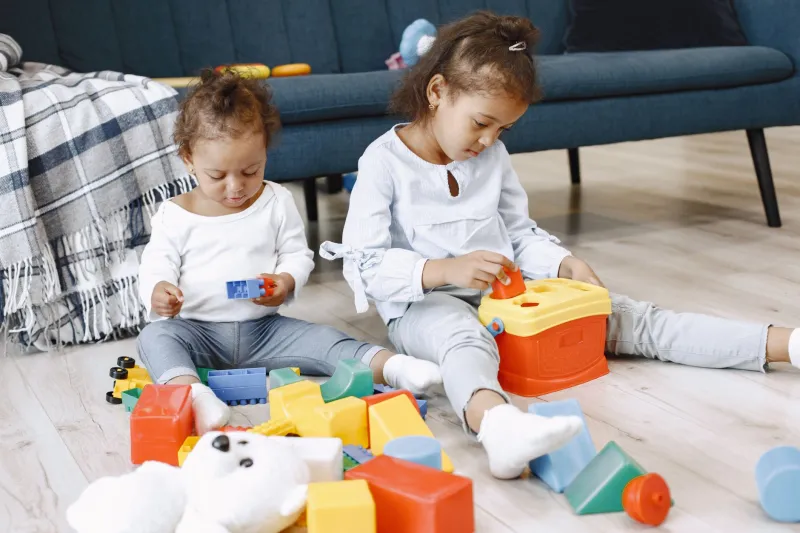
- Keep the materials close and the options few. Legos, paper, tape, markers, a cardboard box. A chaotic toy mountain produces overwhelm, not invention.
- Loosen the default script for screens without scrapping rules. Predictability is what makes the rest of the day feel safe, so keep the boundaries and stop treating every quiet moment as an emergency to solve.
- Let kids be bored in public, too. The back seat, the waiting room, the line at the store. Boredom tolerance built in small doses throughout the year makes the big empty days far easier.
- Do your own nothing nearby. Read a book in the same room. Model what unoccupied looks like on a person who isn't miserable.
What You Might Notice by the Second Week
Around day seven or eight, something shifts for a lot of families. Kids stop asking for a plan. The invented games get longer and more complicated. Siblings negotiate instead of escalating, mostly. Someone starts a project that spans three days.
You may also notice that you're less exhausted. That matters, and not just for you. A parent who isn't running a two-week activity program has more patience for the ordinary friction of family life — which, in December, is worth something.
Doing Less on Purpose
There's no prize for the fullest calendar. There's also no guarantee that the empty one produces magic. Some bored afternoons end with everyone cranky and the cushions on the floor and nobody proud of anything.
That's fine. The point isn't to optimize boredom into a developmental product. It's to stop treating unstructured time as a lapse in judgment. Give your kids a couple of weeks with room in them, and see what they do with the space. Most of the time, they'll do something. Occasionally they'll do nothing at all. Both count.