You Are Not Failing: How to Stop Parenting by Someone Else's Rulebook
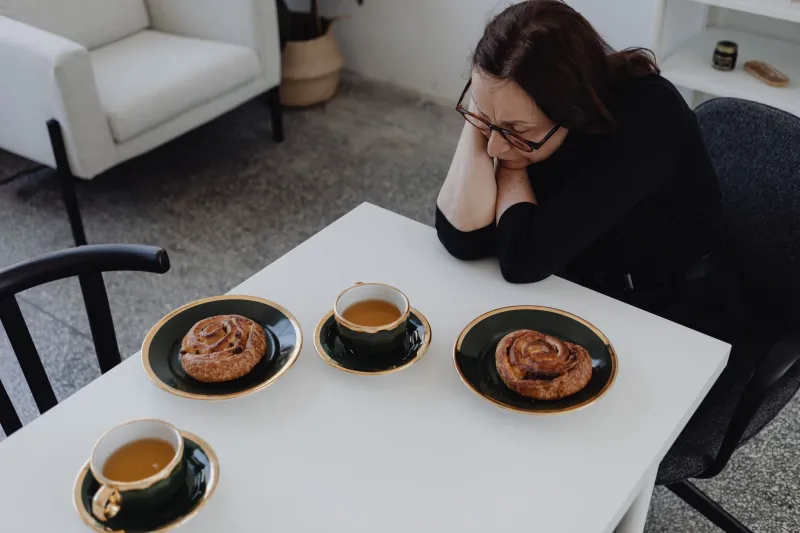
Somewhere between your third cup of reheated coffee and the moment you snapped at your kid for spilling cereal — again — a familiar thought crept in: A good parent wouldn't have done that.
But here's the question nobody asks often enough: Where did you get the definition of "good parent" in the first place?
For most of us, the answer is messy. It's a patchwork of how we were raised, what our pediatrician implied at the last well visit, a parenting book a friend swore by, something a mom in a Facebook group said with alarming confidence, and — yes — a little bit of what we saw on Instagram last Tuesday. We've absorbed all of it, usually without realizing it, and built an internal measuring stick that is frankly impossible to live up to.
That's the guilt gap. And it's not a personal failing. It's a structural problem with how parenting culture works in America right now.
Where the Impossible Standard Actually Comes From
Social media gets blamed for a lot — and it deserves some of it — but the comparison culture that makes parents feel inadequate runs much deeper than a highlight reel.
Start with your own upbringing. Most of us either idealize how we were raised or we're actively trying to undo it. Both create pressure. If your childhood felt warm and stable, you might hold yourself to a standard of recreating that exact feeling — even though your circumstances are completely different. If your childhood had real gaps, you might be overcompensating in ways that exhaust you, because "good enough" doesn't feel safe.
Then there's the parenting philosophy landscape, which in the US right now is genuinely overwhelming. Attachment parenting, authoritative parenting, gentle parenting, free-range parenting — each comes with its own vocabulary, its own community, and its own implicit judgment of every other approach. Spend a week in any parenting forum and you'll absorb the message that if you're not doing it a specific way, you're probably damaging your child. That's not education. That's anxiety dressed up as advice.
Cultural and generational messaging piles on top of that. Many parents — especially mothers — carry the inherited belief that good parenting means self-erasure. That your needs come last, always. That struggle is proof of love. That rest is laziness. These aren't truths. They're inherited stories. But they feel like truths because they've been repeated so many times, by so many people we trusted.
The Guilt That Doesn't Belong to You
Here's a useful exercise: the next time you feel a stab of parenting guilt, pause and ask yourself — whose voice is this?
Is it your mother's? A parenting influencer's? A cultural message about what mothers are "supposed" to sacrifice? Your partner's unexpressed expectations? Sometimes the guilt belongs to you in a meaningful way — it's pointing at something you genuinely want to do differently. That kind of guilt is worth listening to.
But a lot of the time, the guilt is borrowed. It's the internalized voice of a standard you never consciously agreed to. And borrowed guilt is a drain on your energy without offering any useful direction.
Trying to live up to a standard you didn't choose, for values you don't actually hold, is an exhausting way to spend the years of your kids' childhoods. And it tends to produce not better parenting, but more anxious parenting — the kind where you're so focused on performing parenthood correctly that you lose the actual relationship underneath.
Getting Back to What You Actually Believe
This is the work that doesn't get talked about enough: clarifying your own parenting values, separate from the noise.
Start simple. Think about three or four things you genuinely want for your child — not what you want them to achieve, but who you want them to become. Curious? Resilient? Kind? Confident enough to set boundaries? Write those down. Now ask yourself: does the guilt you've been carrying actually serve those goals? Or is it tied to a completely different set of priorities that belong to someone else?
Next, audit the voices you've let into your parenting life. That parenting book that makes you feel terrible every time you open it? It might not be the right book for your family. The online community where everyone seems to be doing more, sacrificing more, achieving more? It's okay to step back. Curating your inputs isn't weakness — it's how you protect the mental space to actually parent.
It also helps to get honest about the difference between values and aesthetics. A lot of parenting guilt is actually about aesthetics — the homemade snacks, the Pinterest-worthy sensory bins, the educational toys, the screen time rules that are supposed to signal what kind of parent you are. Those things are fine if they genuinely reflect what matters to you. But if they're just performance, they're costing you time and energy that could go toward the real stuff.
Releasing Guilt Without Releasing Accountability
Letting go of guilt that doesn't serve you is not the same as lowering your standards. It's about getting honest about which standards are actually yours.
Accountability still matters. When you lose your patience and say something sharp, repair it. When you realize a pattern isn't working, change it. That's not guilt — that's growth. The difference is that guilt loops back on itself and produces shame, while accountability moves forward and produces change.
Give yourself the same grace you'd give a friend. Most parents are extraordinarily kind and generous when a friend describes a hard parenting moment. We rarely extend that same generosity to ourselves. But you are doing this in real time, with real constraints, in a culture that has loaded the definition of "good parent" with more contradictions than any human being could realistically navigate.
You are not the sum of your worst parenting days. You are also the bedtime stories, the showing up, the apologies, the trying again. That's the fuller picture — and it's worth holding onto.
One Thing to Try This Week
Write down, without editing yourself, what you think a "perfect parent" looks like. Then go through that list and mark each item: mine or not mine. You might be surprised how much you've been carrying that was never yours to carry in the first place.
That's where the real work begins — not in doing more, but in getting clearer about why you're doing any of it at all.